What is Campaign Personalization?
Personalizing campaign is part of the broader push towards personalization marketing, the ideal form of targeted marketing. This is frequently a computerized, set up a cycle that utilizes a product stack to arrive at customers at fitting stages in their purchaser’s excursion. This includes individualized informing over different channels to create more grounded client connections around reactions gained from the focused effort.
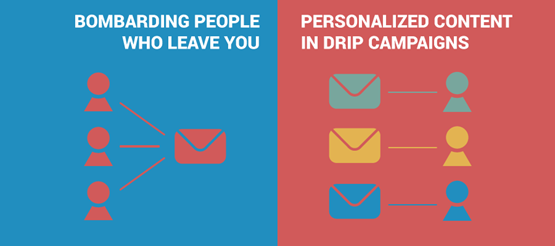
The users are eager to exchange individual data for customized encounters. Brands can improve UX while offering some benefit to their clients, as much as they’re following activities in endeavours to customize campaigns. To make viably focused on informing, advertisers must draw upon all significant touch direct information towards the received upgraded message.
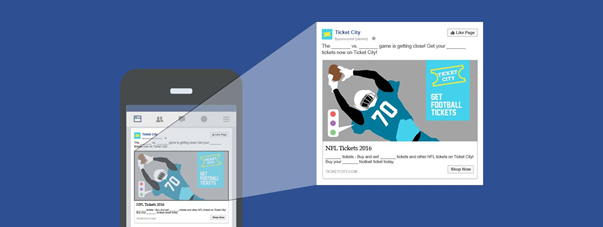
Why Does Campaign Personalization Matter?
Well, because many customers aren’t getting the service they want.
Regardless of all the fantastic products in the market and the modernization over a short period, All things considered, because numerous clients aren’t getting the service or product they need. Customizations means a lot! Especially in terms of satisfying the client and improving their satisfaction and your own personal reach. Basically, brands are not familiar – or only passingly familiar – with the needs of the general audience.
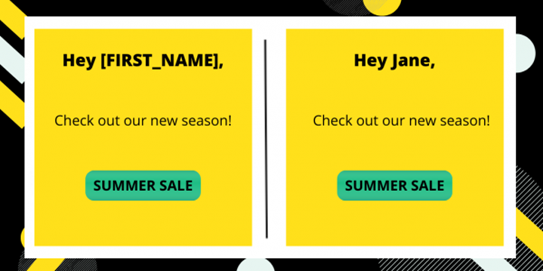
A well-personalized campaign capitalizes upon the importance of using relevant information such as:
- Customer’s name
- Customer’s preferred communication channel
- Referencing customer’s history and current/anticipated needs
- Previous communication interactions
- Income
- Lifestyle
Also, it recognizes customer conduct, the need to feel esteemed as an individual, the need for a customized understanding. There is a scarce difference among individuals and nosy so consistently try to feature esteem while being careful.
How Do I Start?
Segmenting users is the first step to ensuring your personalization efforts go the distance. Essential segmenting factors include:
- Name
- Age
- Behavioural data
- Gender
- Geographic area
- Interests
- Job title or company size
- Transactional data like past purchases or purchasing frequency
- Associates who use your product or service
Past this, brands ought to know about where possibilities fall along with the mindfulness, thought, and choice cycles inside the client venture. When and how prospects become clients can likewise straightforwardly influence how to address clients later on.
For example:
- Subscribers that joined during a purchase are ready to receive upsell and cross-sell offers
- Subscribers that joined a newsletter via your blog are likely very informed about your offering
- Subscribers that arrive from social are primed to share the news with friends
Portioning by phases of the purchasing cycle is tremendously useful. For instance, a potential may not re-visit your website page in the wake of buying since they’ve settled on their educated choice. Now in the life cycle, they don’t bother with any more blog articles. Email and site page notices could undoubtedly crash and burn. However, the client is open to pushing warning advancements or web-based media promoting at the ideal time, as they’re now an upbeat client.
What is a Personalized Lifecycle Campaign?
The client lifecycle alludes to the achievements in the common way that clients follow through the span of a relationship with your image. Lifecycle campaigns extend to clients at particular stages from right on time to mid to late periods of their relationship with the brand.
Lifecycle focusing is based around periods, for example, a measure of time after an application download or three-day follow up after buy. Messages are set off after a set timeframe. Model occasions for lifecycle focusing on include:
Post-Signup
- Welcome series
- Feature update
- Member-to-customer conversion
- Cart abandonment
Post-Purchase
- Single-time buyer series
- Cross-sell
- Loyalty/ birthday
- Replenish or renew the contract
- New product
- Win-back
A few common over time, examples of Personalized marketing that worked and proved to all that nothing is impossible!
- Coca-Cola’s “Share a Coke”
- Paper Style’s Segmentation Email
- Asos’s Social Connection Prompts
- BustedTee’s Time Zone Segmented Emails
- OfficeMax’s Location-Based Emails
- Spartan Race’s Location-Based Emails
- Hubspot’s Account Rep Personalized Triggered Emails
- Nuffield Health’s Paired Landing Pages and Emails
- DoggyLoot’s Segmented Email Opt-Ins
- Lateroom’s Gamification Email Opt-Ins
- Denamico’s Hyper-Personalized Newsletters
- RescueTime’s Personal Productivity Report
- Grammarly’s Weekly Writing Updates
- Facebook’s Behavior-Triggered Email
- GlobalGiving’s Recommendation Engine Emails
- Samsung’s Pop-up Modals
- Boca Java’s Segmented Promotions
- Rdio’s Personalized Radio Recommendations
What is a Personalized Behavioral Campaign?
Behavioural campaigns are triggered through some form of customer behaviour. The actions and behaviours your audience has taken in response to your brand should determine the messaging they receive. Conduct campaigns are set off through some client conduct. The activities and practices your crowd has taken because of your image ought to decide the informing they get.
Anything from form submissions, social media activity, email engagement, website activity, and date for your other software must be considered when targeting users. Examples of behavioural actions worth targeting include:
- Newsletter Signup: target with welcome messaging
- Content Downloads: target with additional content
- Cart Abandonment: target with discounts and promotions
- Social Media Engagement: a target for referrals and prompt additional shares
- Ad Clicks: tagged with incentives and social proof
- Referred Customers: target with referral rewards
- Purchases: a target for upselling and cross-selling and surveys
- Periods of Inactivity: target with re-engagement messaging
Step 1: Categorize your personas and your funnel
The first thing you’ll want to do is to split users into different audiences or personas.
We find it helpful to think about what attributes drive engagement among customers. Things like: could determine it. It’s important to remember that in this process, Conducting campaigns are set off through some type of client conduct. The activities and practices your crowd has taken because of your image ought to decide the informing they get.
- demographic (role, location, industry)
- behaviour (click history, cart abandonment, downloaded content)
- lifecycle (new signup vs inactive customer)
To understand this better, take the example of when you utilize a device like Clearbit and split your personas by segment. Or then again, you could use a tool like Google Analytics to part your clients by the referrer or presentation page they are rolling in from, offering separate points of arrival from various advertisements. Or on the other hand, you could pull in information from your information distribution centre. We find that users most often identify first by their job title and role at a company, so that’s the persona we’ll start with.
At whatever point a client self-chooses into one of these groups, we gather that information with a segment by utilizing a distinguished call. From there, we have to outline the various states in our pipe. As a rule, you need your pipe to pull out from a solitary objective. For our situation, we’re attempting to build our number of paying clients. ****Then, map all the means essential to achieve that objective.
At each step in the funnel, there are a few events that we have to track:
- ‘Signed Up’ — collected at the time of first signup.
- ‘Collected Data’ — triggered when the user first sends data into the segment.
- ‘Enabled Destinations’ — ****collected when a user-enabled their destination.
- ‘Upgraded Plan’ — a track call is triggered when the user upgrades to a paying user.
Once we have these four events, we have our funnel and our personas! Time to create our email campaigns.
Step 2: Create track-specific emails
The most ideal approach to imagine these email campaigns as a network, part among persona and lifecycle stage. At each stage, we will probably poke the client to get to the following step. Presently it’s an ideal opportunity to compose the messages, no simple undertaking. Much will rely upon your organizations’ voice and tone, however, there are a couple of straightforward guidelines we suggest everybody ought to follow.
Encourage or teach: The main objective of your messages ought to be to train the client about the worth they could be getting from your item. It ought to be nuanced, inside and out, and in particular show, the client something they don’t as of now have a clue.
Subject lines
The essential central factor with regards to whether your email gets opened or not. If you burn through 30 mins composing a support email, it merits spending at any rate 10 mins of that time on a clever title.
Some tips:
- Keep it short—5 words or under functions admirably
- Use sentence case — sort of a hack, however, appears to function admirably)
- Pose an inquiry—gave it’s a genuine inquiry the beneficiary could/would need to reply
- Use ellipsis—another hack yet can function admirably in the correct setting
- Depict the subject of your email—dodge misleading content no matter what
Remember to write in lines, not passages Nobody likes opening an email to a colossal mass of text. Compose your messages to put it plainly, smart sentences that are simple for the peruser to check (and accordingly click)—one idea for every sentence/line of email functions admirably.
Step 3: Bring users back on track.
While the email campaigns are relatively straightforward, not all your users will follow a linear path. Some new signups will require more advanced email flows to help them overcome stumbling blocks they may run into So once you’ve built out the basic flow or an email campaign, we recommend adding a few advanced flows to each campaign,
While the email campaigns are generally direct, not every one of your clients will follow a straightforward way. Some new information exchanges will require further developed email streams to assist them with defeating hindrances they may run into So once you’ve worked out the essential stream or email campaigns, we prescribe adding a couple of cutting edge streams to each campaign.
We use the following rules internally.
- Add follow-ups if the user hasn’t advanced stage on 3, 5, and 7-day intervals
- Change up your messaging each time to try and solve for a different “sticking point”.
- Personalize across a single dominant vector (industry, use case, etc
Step 4: Closing the loop
Once we’ve set our campaigns live, it’s time to analyze performance. You’ll want to measure your campaign through two lenses: impact on your core metrics (i.e. ‘signed up’, ‘collected data’, ‘enabled destinations’, and ‘upgraded plan’) as well as the performance of the email itself.
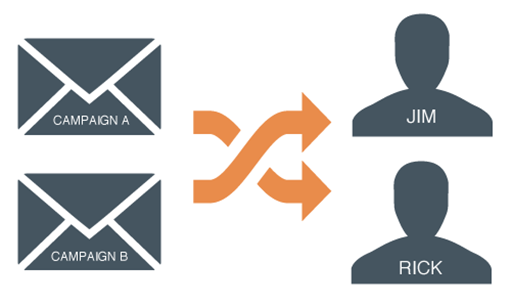
Estimating the effect on your centre measurements To precisely gauge and trait your campaigns effect on centre measurements, you’ll have to direct an A/B test. This will assist you with secluding effort results against different conditions that may be driving an adjustment in client conduct (site/item changes, financial movements, and so forth.).
- By including Customer.io as a Segment Source, you’ll have the option to stream things like “email conveyed” and “email opened” from Customer.io, back into segment, and on to investigation devices like Mixpanel or Amplitude.
- With this information, you’ll have the option to analyze the centre measurements of clients who got, opened, or clicked your mission to the individuals who didn’t. This gives you a 360-degree perspective on your clients and experiences into whether your mission is emphatically affecting their conduct.
As a baseline, you’ll want to keep track of open email rates and click-through rates. In general, we try to aim for a 50+% available rate and 10+% click-to-open rate.
- In Customer.io or the email advertising apparatus of your decision, you can without much of a stretch create reports to audit the navigate and open rates for your missions.
- When you distinguish a territory for development inside your mission, set up an A/B test to check whether measurements can be improved. Straightforward changes like changing a title (to improve open rate) or altering a source of inspiration (to improve click-through) can go far to affect execution.
- By customizing lifecycle missions to various personas and reliably checking execution to repeat, we’ve seen our navigate rates develop by 80+%. With segment, you’ll have the option to arrive at the perfect clients at the ideal time with the right, customized message.
Final Thoughts
These are some steps of the technique of effective personalization that you can use to boost your conversion rate. As stated and explained above, the fundamental spotlight is on getting personalization right so you can convey applicable constant encounters for every client. The more focused on your message, the more probable individuals are to change over.